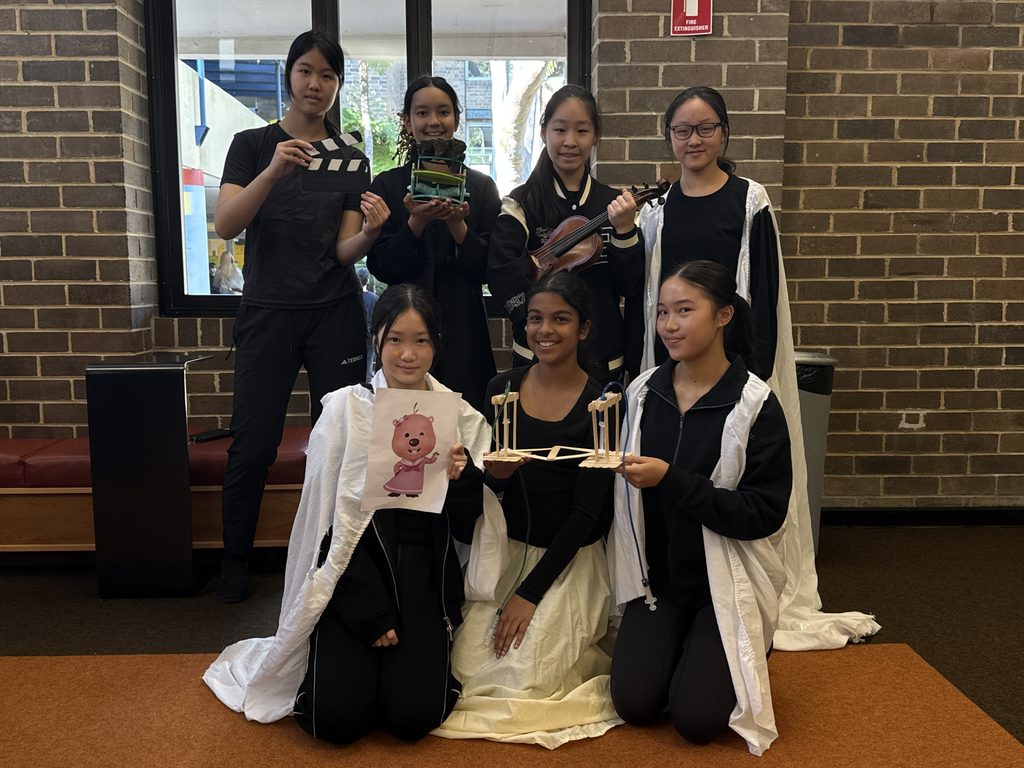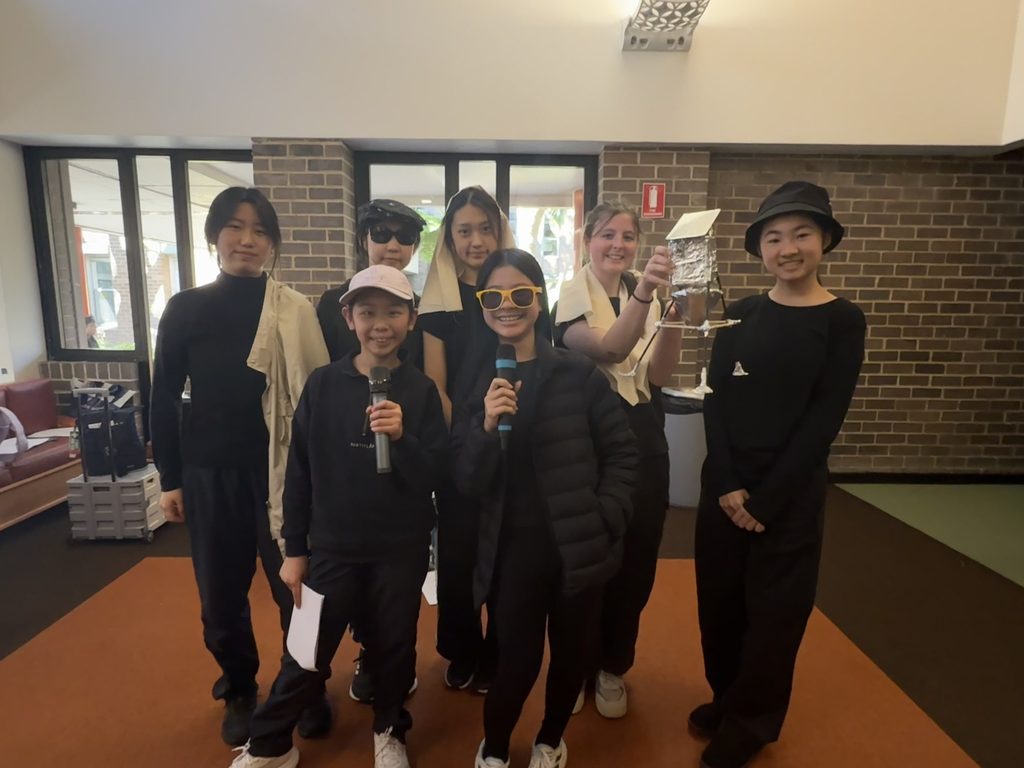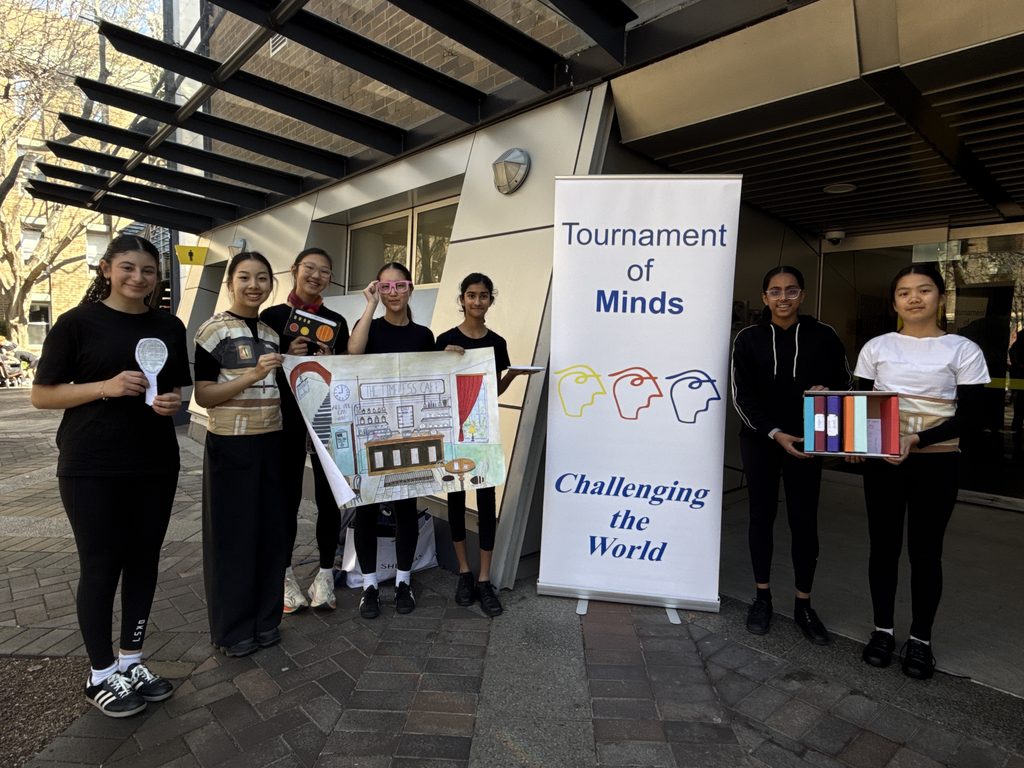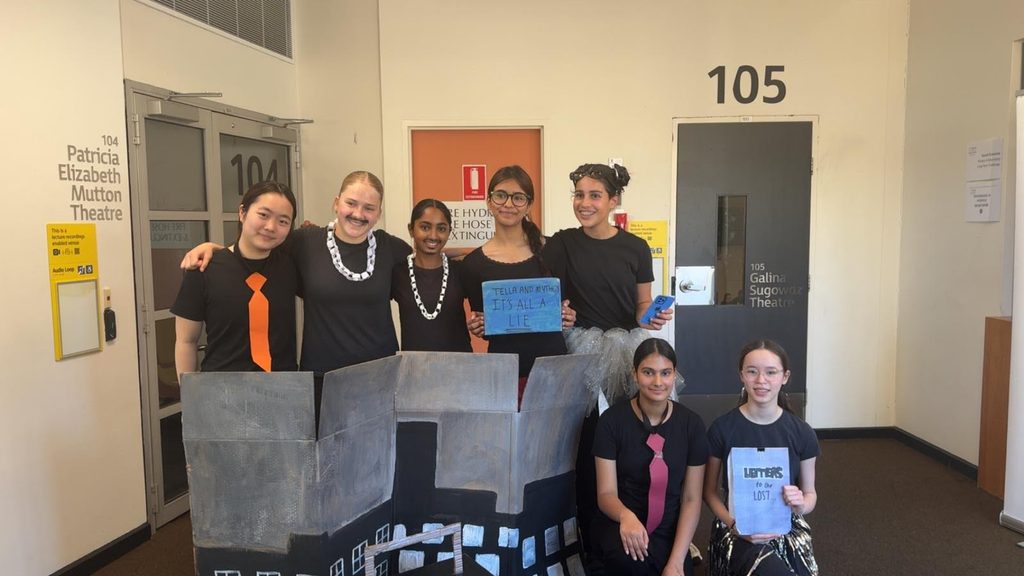
Six Meriden teams represented the School at the Sydney North Regional Finals of the Tournament of Minds (TOM), a competition that challenges students to think creatively, solve complex problems and work collaboratively.
Over six weeks, teams developed and rehearsed innovative responses to long-term challenges before presenting their solutions at the Regional Finals. Students also took part in a spontaneous challenge, requiring them to think on their feet, adapt to new situations and work together under pressure.
Across the competition, Meriden students demonstrated impressive creativity and problem-solving skills. Their imaginative use of props, engaging storylines and expressive performances reflected the thought, preparation and teamwork behind each presentation.
Regional Results
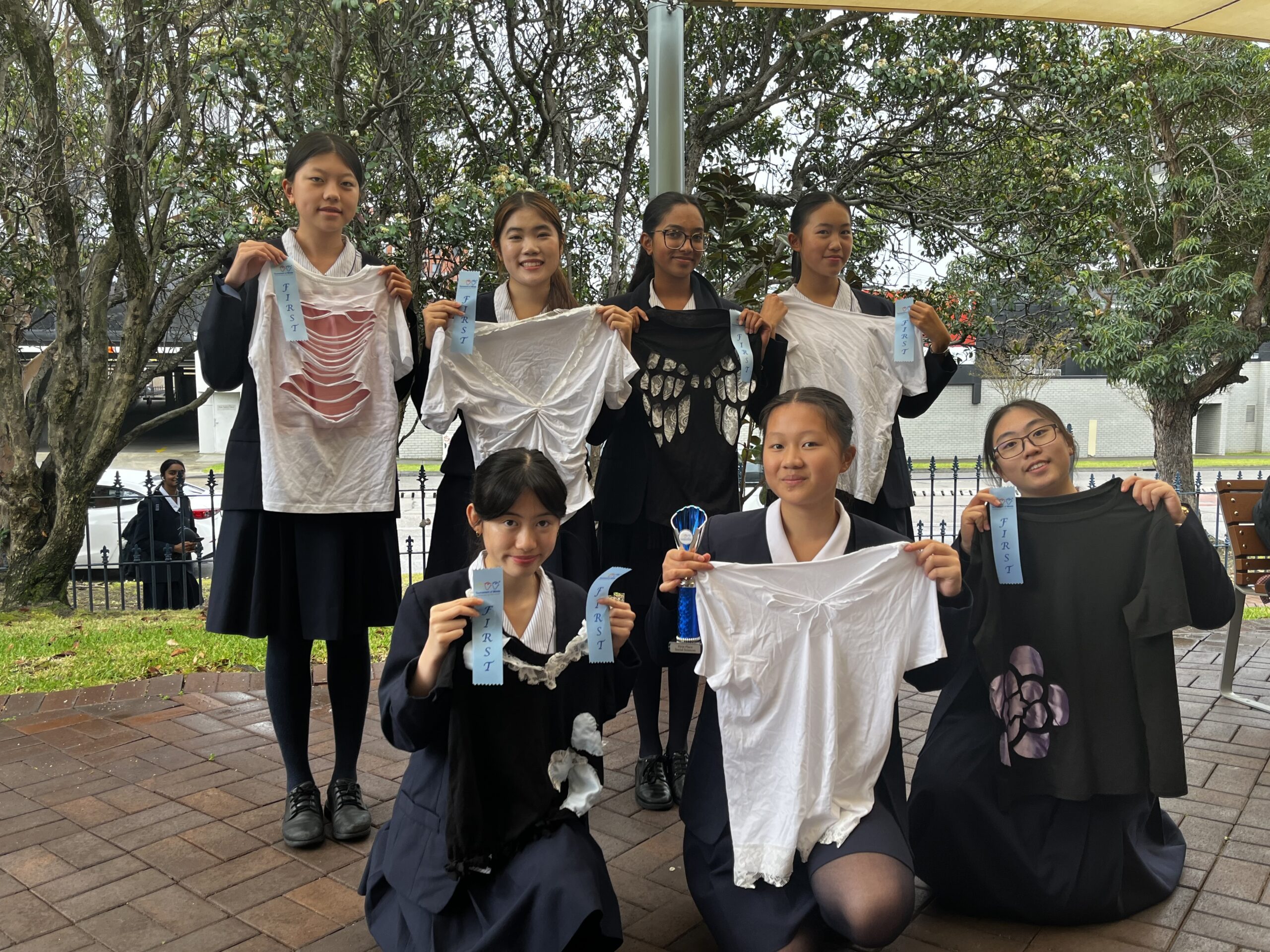
Meriden achieved excellent results across several categories at the Regional Finals. GraviTOM secured first place in the STEM category, while Louis Retorn took first place in Social Sciences. ‘Raspberries’ also received a Merit award in STEM. The Language Literature teams, The Sun Won’t Come Out TOMorrow and Letters to the Lost, and the Arts team, The Last Twist of the Knife, also presented their creative solutions at the Regional Finals.
Inside the Teams’ Challenges
Year 10 Team Captains reflected on their challenges and shared insights into the creative process, ideas and collaborative experiences behind their presentations.
GraviTOM (STEM) imagined a world without gravity and made a miniature that used a syringe hydraulic press system with an automata structure to control the moving component effectively through our STEM principles. Our script and video highlighted the miniature and how our team was successfully able to restore gravity through our miniature.
– Noemi
Raspberries (STEM) We created an original proposal for a science fiction film, accompanied by a functional miniature and video excerpt. Our performance focused on our film Atavism, following protagonists navigating a dystopian world where the sun is expanding in their search for water. Our miniature was a solar-powered drill used to access groundwater, showcased through a green-screened video featuring our team members as the protagonists and demonstrating its function and the scale of our film.
– Luyin and Sophie
The Sun Won’t Come out TOMorrow (Language Literature) produced and performed a modern radio play series designed to engage teenagers and entice radio stations to air the show. Our team created a sci-fi mystery to modernise traditional entertainment, centred on a café where time stops. The three protagonists become trapped and must escape before their lives continue without them.
– Emilia and Mandy
Letters to the Lost (Language Literature) explored the dangers of short-term solutions to social media restrictions, the importance of truth, and the power of communication through our three main characters: Tella, Loki, and Mythos. We conveyed these ideas through our performance skills, as well as the use of props, including a ‘ghetto blaster’, or radio, and costumes. These elements helped to characterise our figures and give them depth within the short amount of time we had.
– Frances and Hannah
The Last Twist of the Knife (The Arts) responded to the prompt of a non-visual artist trapped inside an Escher-inspired artwork, creating an escape route by blending both artistic styles. Our skit interpreted T.S. Eliot’s Rhapsody on a Windy Night, following the protagonist through his subconscious across the night, with a recurring knife prop symbolising his choices. We used optical illusions on our set to create a distorted sense of time, building to a final scene where the protagonist had to choose between using the knife to kill his enemy or unlock the door and escape to reality.
– Misha and Anja
Louis Retorn (Social Sciences) created limited-edition T-shirts in response to the ethical, economic, and environmental issues surrounding fast fashion. Our team considered ethical sourcing and minimising environmental impact through upcycling second-hand shirts rather than buying new ones. We redesigned them into unique pieces by creating different shapes and adding fabric patchwork, lace, and other materials, giving pre-loved clothing a new purpose.
– Elisya