
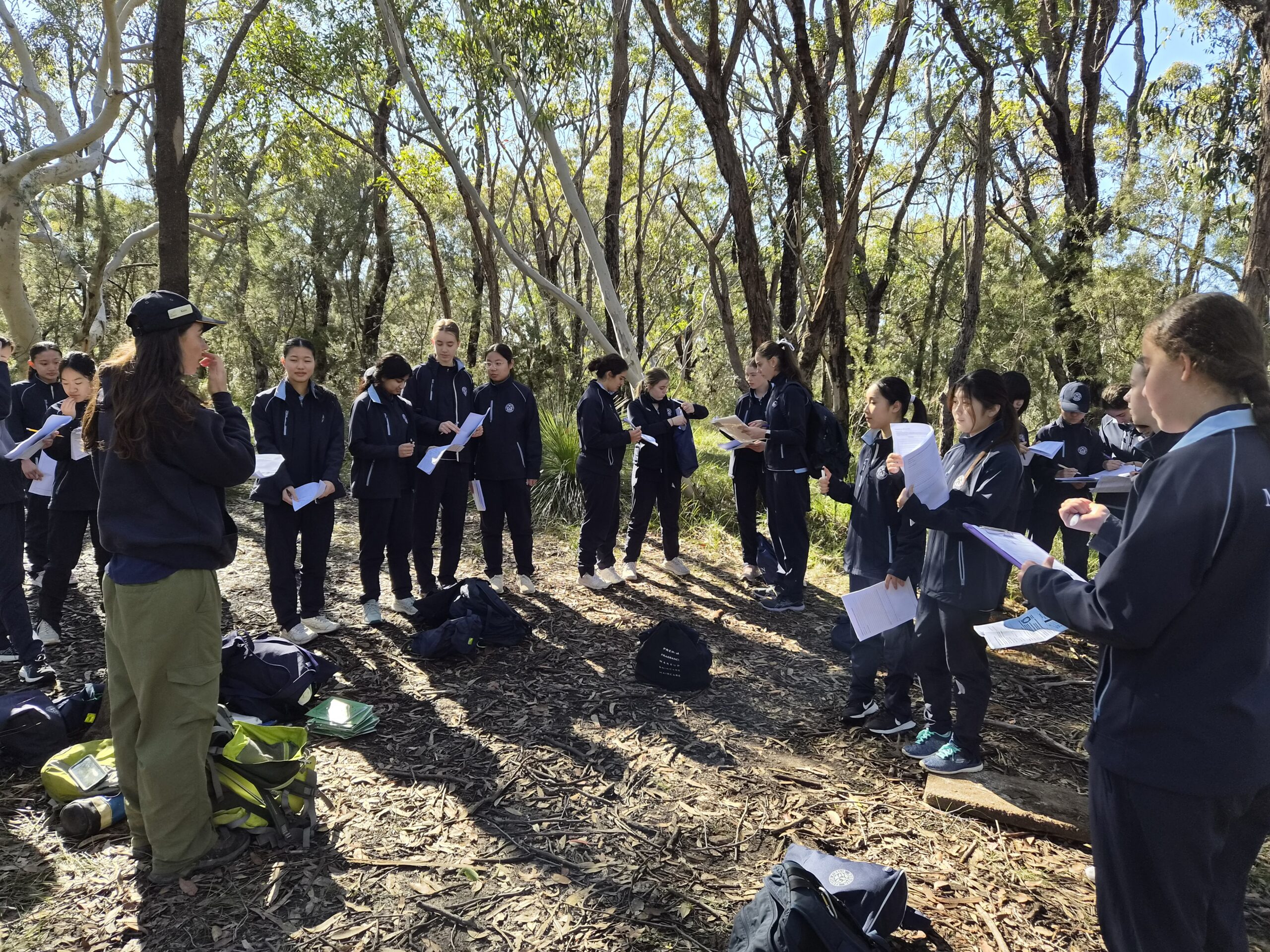
Year 11 Biology students recently swapped the classroom for the bush, embarking on an immersive day of ecological fieldwork in the diverse ecosystems of Frenchs Forest. The excursion provided an invaluable opportunity for students to investigate ecological concepts firsthand and gain practical experience in the methods used by field scientists.
Working within the local bushland environment, students identified native tree species and aquatic invertebrates, measured vegetation abundance and examined the environmental factors influencing the distribution of plants and animals. They also explored the complex relationships between biotic and abiotic factors in a eucalypt forest ecosystem, developing a deeper understanding of how living organisms interact with each other and their environment.
Putting Theory into Practice
After spending weeks studying ecosystems in the classroom, students had the opportunity to see ecological principles in action. The fieldwork experience brought textbook concepts to life, allowing students to apply scientific knowledge in an authentic setting while developing a greater appreciation for the natural world.
Students navigated the rewards and challenges of conducting scientific investigations outdoors, learning the importance of careful observation, accurate data collection and adaptability when working in changing environmental conditions. For many, a highlight of the day was handling stick insects and investigating the remarkable structural and behavioural adaptations that enable these fascinating creatures to thrive within their eucalypt habitat.
Skills for Future Scientists
Throughout the day, students demonstrated curiosity, resilience and teamwork as they collected and analysed ecological data. They developed valuable fieldwork skills, including species identification, environmental sampling techniques and scientific recording methods, all of which are fundamental to the study of Biology.
Equally important was the opportunity to learn how scientific investigations can be conducted responsibly, with minimal impact on natural ecosystems. By balancing the needs of data collection with environmental stewardship, students gained insight into the ethical responsibilities of scientists working in the field.
The excursion not only strengthened students’ scientific understanding but also encouraged collaboration, critical thinking and problem-solving. Many appreciated the chance to learn outdoors, enjoying the sunshine and natural surroundings while building skills that will support their future studies in Biology and beyond.
Learning Beyond the Classroom
Experiences such as the Frenchs Forest fieldwork excursion play an important role in helping students connect theory with practice. By engaging directly with local ecosystems, students gain a richer understanding of ecological processes and the importance of biodiversity, while developing the confidence and practical skills required of the next generation of scientists.